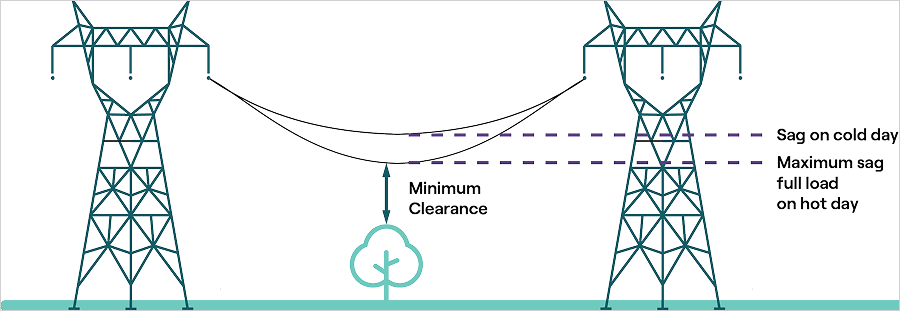
Transmission conductors (wires) are dynamic in nature. They can sag lower to the ground depending on parameters such as ambient temperature and operating conditions. Minimum vertical clearances must be maintained from the maximum design sag levels of the conductors (worst-case scenario). Hydro One will review these clearances as they are case-specific and not immediately apparent by observation alone.
Hydro One manages vegetation to support the safe and reliable operation of the electricity system. As part of this approach, vegetation activities are prioritized based on system needs, and Hydro One does not typically undertake planned vegetation maintenance at the base of transmission towers.
Vegetation management on easement or licensed lands is carried
out in accordance with applicable land rights, land-use agreements, and regulatory requirements . The scope of work may vary depending on site conditions and the terms of the underlying property interests.
For safety reasons, individuals should not assume that vegetation work is permitted near transmission infrastructure and should avoid activities that could pose a safety risk, interfere with infrastructure, or impact system operations.
Grass Maintenance Policy for Hydro One or Provincially owned ROWs in Urban Environments
Grass cutting services on transmission ROW lands located within urban areas will be conducted annually between May 1 and September 30. During this period:
- Grass is cut at least once per month, weather permitting.
- Due to increased vegetation growth in early summer, two grass cutting cycles are scheduled in June.
This maintenance program is intended to support safety, and operational requirements within transmission corridors. Grass cutting schedules may be subject to change due to weather conditions, site accessibility, or operational considerations.
Hydro One follows Integrated Vegetation Management (IVM) practices that balance environmental stewardship with maintaining safe clearances for the continued operation of our electrical assets. These practices focus on the removal of “incompatible” vegetation that may pose a risk to infrastructure. Compatible species are generally preserved to support a more natural landscape where feasible and are typically located outside the line zone or do not grow to heights that would interfere with the lines.
Transmission corridors constitute active utility infrastructure lands and are not intended for public use unless expressly authorized. Public use, including access, occupation, or planting, is prohibited without appropriate authorization, and site conditions may vary and can include uneven terrain and ongoing maintenance activities. As these lands are not maintained for general recreational safety, any unauthorized entry is undertaken at the individual’s own risk.